
Genset Basics for Bitcoin Mining
Introduction
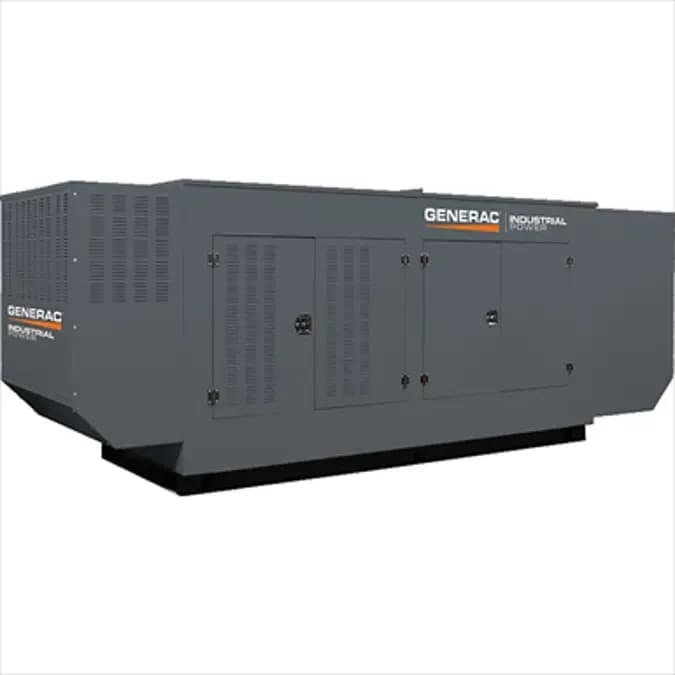
Gensets (generator sets) are the heart of gas-powered Bitcoin mining. They convert natural gas → electricity → Bitcoin. Choosing the wrong genset equals project failure or massive cost overruns. This post covers genset types, sizing, and the real cost to budget.
What is a Genset?
Definition: A genset is a combination of:
- Prime mover (engine or turbine) - converts fuel to mechanical energy
- Generator (alternator) - converts mechanical energy to electricity
- Control systems - monitors, protects, and manages output
For Bitcoin Mining: You need a continuous duty rating for 24/7/365 operation, not standby/emergency backup gensets with their lower duty cycle. And they must be natural gas fueled, not diesel.
Turbines vs. Reciprocating Engines
Comparison Table
| Feature | Gas Turbine | Reciprocating Engine |
|---|---|---|
| Size Range | 5+ MW (large scale) | 100 kW - 20 MW |
| Complexity | Very high | Moderate |
| Maintenance Cost | High ($/MW-month: $15+) | Lower ($/MW-month: $5-10) |
| Startup Time | 30+ minutes | 2-5 minutes |
| Load Flexibility | Poor (needs 70%+ load) | Excellent (30%-110%) |
| Fuel Quality Sensitivity | Very high | Moderate |
| Initial Cost | $2.5M+ per MW | $1M per MW |
| Best Use Case | Grid-scale, always-on | Flexible, <50 MW mining |
Gas Turbines: Skip Unless You're Huge
Pros: High efficiency at large scale, compact footprint per MW, and lower emissions per MW.
Cons: Expensive ($2.5M+ per MW), complex maintenance requiring specialists, poor part-load performance (must run at 70%+ capacity), very sensitive to fuel quality, and long lead times (months to manufacture).
Bottom Line: Only consider turbines if you're building high tens of MW to GW scale, you have pipeline gas (consistent quality), you have turbine maintenance expertise, and you need maximum efficiency over flexibility.
Reciprocating Engines: Your Go-To for Bitcoin Mining
Pros: Cost-effective ($1M per derated MW), excellent load flexibility (30%-110% load range), faster startup and load response, easier to maintain (more service providers), modular scaling (1-2 MW at a time), and more tolerant of gas quality variations.
Cons: More moving parts (more wear items), regular maintenance required, larger footprint per MW than turbines, and noise (requires sound attenuation).
Bottom Line: Reciprocating engines are the standard for Bitcoin mining on gas. Sizes range from 500 kW to 5,000 kW per unit, with common sizes of 1 MW, 2 MW, and 3 MW per genset. Building 10 MW? Use 5 × 2 MW gensets for redundancy.
Engine-Only vs. Full Package: The $500,000 Trap
What's "Engine-Only"?
You buy just the Caterpillar (or other OEM) engine and don't realize you need to separately source the generator/alternator, enclosure and skid, control systems, exhaust and cooling, and wiring and switchgear. You think you're getting a great deal, but you haven't properly understood the cost of usable power generation equipment.
The Reality: The Forgotten Packaging Costs
Most people forget: Packaging typically adds 25-50% to engine-only cost. The engine is just one component—you still need the generator/alternator, enclosure and skid, control systems, labor and integration, and engineering and testing. Result: What looked like a great deal on the engine becomes comparable to (or more expensive than) a full package genset.
Additional Risks: Warranty issues (who's responsible—engine OEM or packager?), integration problems (delays, performance issues), support challenges (no single vendor), and permitting complexity (not UL-listed as complete unit).
Full Package Gensets: Pay the Premium
What You Get: A complete, integrated unit from one manufacturer that's factory-tested and certified, with a single warranty covering the entire genset, one point of contact for service, and drop-on-site ready with minimal field work required.
Reputable Manufacturers:
- Caterpillar (Cat)
- Waukesha (now part of Innio)
- Cummins
- Generac
- GE Jenbacher
Reputable Packagers (if you must go engine-only route):
- Pioneer Power Solutions
- Kohler Power Systems
- PowerSecure (Southern Company)
- ASCO Power Technologies
- Encorp (Caterpillar authorized packager)
Bottom Line: Full package is worth it for faster deployment, lower risk (warranty, support), and easier financing (lenders prefer turnkey).
The $1M per MW Rule (Derated)
Industry Rule of Thumb: Budget $1M per MW of derated capacity
Example:
- Need 10 MW of actual mining capacity
- Buy 5 × 3 MW gensets (15 MW nameplate)
- Derate by 25% (altitude, temp, voltage conversion) → 11 MW usable
- This gives you 10 MW for mining with some headroom
- Per derated MW: ~$1M/MW for the gensets
See the Derating Genset Performance post for details
What's Included in $1M/MW?
- Complete genset (engine + generator + controls)
- Enclosure and weatherproofing
- Basic exhaust system
- Skid/mounting
- Factory testing and commissioning support
What's NOT Included?
- Site preparation and foundations
- Gas conditioning equipment
- Electrical interconnection and switchgear
- Shipping and installation
- Sound attenuation (if required)
- Permitting and engineering
Note: Total project capex (including all infrastructure and miners) will be significantly higher than genset cost alone
Key Genset Specifications to Understand
1. Power Ratings
- Standby Rating: Maximum power for emergency backup (limited hours/year)
- Prime Rating: Continuous power with brief overloads
- Continuous Rating: 24/7/365 maximum power (use this for Bitcoin mining)
Example:
- Genset model: Cat 3516 (2 MW nominal)
- Standby: 2,250 kW
- Prime: 2,000 kW
- Continuous: 1,800 kW ← Use this rating
2. Fuel Consumption
- Measured in MMBtu/hour or scf/hour (standard cubic feet per hour)
- Typical: 10-12 MMBtu/hour per MW output
- Varies by engine efficiency and load percentage
Example:
- 2 MW genset at full load: 22 MMBtu/hour
- Gas cost $1.00/MMBtu: $22/hour = $528/day = $193,000/year
See the Buying Gas for Bitcoin Mining post for details
3. Emissions
- NOx (nitrogen oxides): Regulated in many areas
- CO (carbon monoxide): Also regulated
- Volatile Organic Compounds (VOCs)
Compliance Options:
- Non-catalytic: Lower cost, higher emissions
- Catalytic: Additional cost per genset, meets strict standards
Permitting Consideration: Some jurisdictions require catalytic converters
4. Voltage and Frequency
- Standard US: 480V or 600V, 60 Hz
- Bitcoin miners: Usually 220V or 240V input
- May need transformers/converters (efficiency loss ~5% as discussed in Derating Genset Performance)
5. Maintenance Intervals
- Minor service: Every 250-500 hours (2-4 weeks)
- Major service: Every 2,000-4,000 hours (3-6 months)
- Overhaul: Every 20,000-40,000 hours (3-5 years)
See the Maintenance & Operations post for maintenance costs
Genset Sizing for Bitcoin Mining
Step 1: Determine Mining Load
- Bitcoin miner power consumption: 3,000-3,500 W per unit
- Example: Antminer S21 = 3,500 W
- 300 miners = 1,050 kW load
Step 2: Account for Derating
- Site altitude: 2,500 ft → 10% derate
- Summer temperature: 105°F → 10% derate
- Gas quality: Fair → 5% derate
- Total derate: 25%
Step 3: Size Gensets
- Need 1,050 kW usable power for miners
- After 25% derate: Need 1,400 kW nameplate
- Use 1 × 2 MW genset (2,000 kW nameplate)
- After derating: 1,500 kW usable → enough for mining load + auxiliary
Step 4: Add Auxiliary Loads
- Cooling systems: 50-100 kW per 300 miners
- Control systems, lighting, misc: 10-20 kW
- Add 5% buffer for safety
Final Sizing: 2,000 kW nameplate genset for 1,050 kW mining load (after accounting for derate and auxiliary)
Redundancy and Reliability
N+1 Configuration (Recommended)
- "N" gensets needed for full capacity
- "+1" genset for backup/maintenance
- Can maintain 100% mining during genset service
Example:
- Need 10 MW: Use 6 × 2 MW gensets (not 5 × 2 MW)
- Any 1 genset can be offline for maintenance
- Keeps 10 MW running
Cost: +20% capex, but much higher uptime
N Configuration (Budget Option)
- Exactly enough gensets for full capacity
- No redundancy
- During maintenance: 20% downtime (if using 5 gensets)
Only acceptable if:
- Budget constrained
- Maintenance can be scheduled during low hash price periods
- Modular/movable operation (limited lifespan)
New vs. Used Gensets
New Gensets
- Pros: Full warranty, latest emissions tech, financing available
- Cons: Higher cost, longer lead times (6-12 months)
- Cost: $1M per MW derated (full package)
Used/Refurbished Gensets
- Pros: 30%-50% lower cost, faster availability
- Cons: Limited/no warranty, unknown maintenance history, may not meet emissions
- Cost: Lower than new, but highly variable based on age/condition
Risks of Used:
- Hidden wear (need thorough inspection)
- Shorter remaining life (may need overhaul soon)
- Harder to finance (lenders prefer new)
- Parts availability (older models may be obsolete)
When Used Makes Sense:
- Short-term projects (2-3 years)
- Wellhead gas with uncertain decline
- Experienced operator with maintenance capability
Leasing vs. Buying
Buying (Ownership)
- Pros: Own asset, depreciation benefits, no ongoing payments after payoff
- Cons: High upfront capex, residual value risk
- Financing: Equipment loans, 6%-10% interest, 5-7 year terms
Leasing
- Pros: Lower upfront cost, maintenance included (sometimes), easier exit
- Cons: Higher total cost over time, no ownership equity
- Cost: Lease payments vary widely based on terms and credit
Hybrid Option: Lease-to-own
- Lease for 3-5 years
- Purchase option at end
- Good for proving out project before full commitment
Genset Infrastructure Components (What You Need Beyond the Genset)
Major Cost Categories:
- Gensets (5 × 2 MW units for 10 MW) - Largest single line item
- Site Prep & Foundations - Concrete pads, grading, drainage
- Gas Conditioning & Metering - Required for wellhead gas especially
- Electrical Interconnect & Switchgear - Connect gensets to mining load
- Exhaust & Sound Attenuation - May be required by permits
- Shipping & Installation - Transport and setup
- Permitting & Engineering - Professional services
- Contingency (10-15%) - For unexpected costs
Plus Bitcoin Mining Equipment:
- Bitcoin miners
- Containers/cooling infrastructure
- PDUs and electrical distribution
Note: Total project capex varies widely based on site conditions, gas quality, and local requirements
Related Posts
- Derating Genset Performance - Critical for sizing gensets correctly
- Maintenance & Operations - $5-10/MW-month minimum for reciprocating engines
- Buying Gas for Bitcoin Mining - Fuel consumption drives gas requirements
- Gas Quality Analysis - Gas quality affects genset performance and longevity
- Financial Modeling for Bitcoin Mining - Genset capex is largest cost component
- Complete Checklist for Launching Bitcoin Mining - Step 2 covers genset selection
Key Takeaways
- Reciprocating engines are the right choice for <50 MW Bitcoin mining (not turbines)
- Full package gensets beat engine-only deals (avoid the $500,000 trap)
- Budget $1M per MW of derated capacity (not nameplate)
- Always size for continuous duty rating (not standby or prime)
- N+1 redundancy is worth the +20% capex for reliability
- Reputable OEMs: Caterpillar, Waukesha, Cummins, Generac, GE Jenbacher
- New gensets preferred for financing and warranty protection
- Used gensets save 30%-50% but carry higher risk
- Derate for altitude, temperature, and gas quality before sizing
- Packaging adds 25-50% to engine-only cost (most people forget this)