
Buying Gas for Bitcoin Mining
Introduction
Natural gas is the fuel for your offgrid Bitcoin mining operation. Gas costs can be a sizeable portion of operating expenses and are often the key driver of profitability. You have two main sourcing options: wellhead (cheap but risky) versus pipeline (stable but pricier).
Getting gas sourcing wrong equals project failure. This post covers how to evaluate, negotiate, and secure your gas supply.
Why Gas Sourcing is Critical
Gas costs directly impact mining profitability. Typical consumption is 300 MCFD per MW output available for mining. A 10 MW operation uses 3,000 MCFD or 1.1M MCF per year. A price difference of just $1 per MCF equals over $1M in annual cost difference.
Wellhead Gas vs. Pipeline Gas
Overview Comparison Table
| Attribute | Wellhead Gas | Pipeline Gas |
|---|---|---|
| Price | $0.50-$1.50/MMBtu (fixed, stranded) | Waha ~$1.50/MMBtu or Henry Hub ~$2.50/MMBtu (highly variable) |
| Volume Stability | Declining 10-50%/year | Steady (as contracted) |
| Quality | Variable (needs testing) | Consistent (pipeline spec) |
| Contract Term | 2-5 years typical | 5-20 years possible |
| Infrastructure Needed | Gas conditioning, metering | Tap + metering |
| Risk Profile | High (decline, quality) | Medium (price volatility) |
| Best For | Short-term ops, low capital | Long-term ops, capital-intensive |
Wellhead Gas: Dirt Cheap but Declining
What is Wellhead Gas?
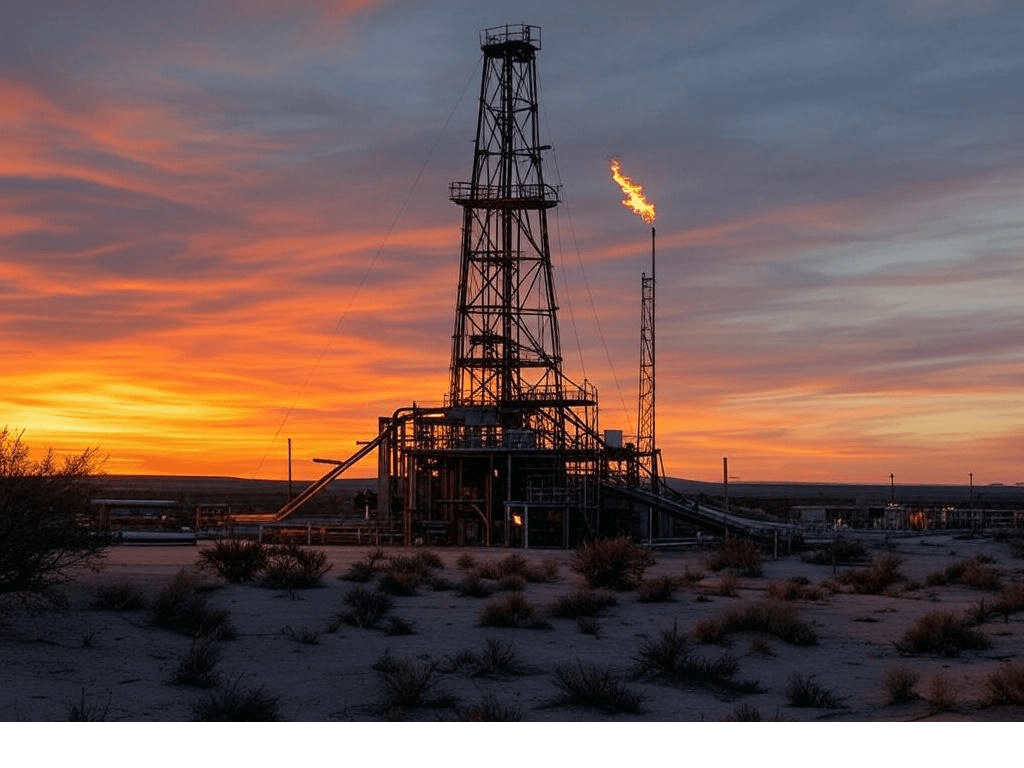
Wellhead gas comes directly from oil and gas wells. It's often "stranded" gas because operators have to flare it or shut in the well since they can't get it to market. You're doing them a service by taking it, but it's never free anymore—there are many other miners that'll happily pay for that gas.
The Decline Problem
Natural production decline is a fact of life—wells produce less gas over time. Wellhead gas (associated/stranded) production can decline 10-50% per year. The decline rate varies widely based on well age, formation, and production practices.
Impact on Bitcoin Mining:
- Year 1: 3.0 MMcf/day available → powers 10 MW
- Year 2 (30% decline): 2.1 MMcf/day available → powers 7 MW (-30%)
- Year 3 (30% decline): 1.5 MMcf/day available → powers 5 MW (-50% from Y1)
Critical Question: What's your genset capex payback period?
- If 2-3 year payback and gas declines 30%+/year: Project fails
- Need 24-36+ month gas production forecast to model this
Gas Quality Variability
Wellhead gas composition changes over the well's life. In early life, you get higher pressure and better quality. In late life, expect more water, impurities, and lower BTU content. See the Gas Quality Analysis post for details.
Infrastructure Requirements
- Gas conditioning equipment:
- Separators (remove liquids)
- Heaters (prevent freezing)
- Filters (remove contaminants)
- Pressure regulation
- Metering
- Pipeline from wellhead to site (distance dependent)
Note: Wellhead infrastructure costs can be significant before first miner turns on
When Wellhead Gas Makes Sense
-
Short-term operations (2-3 years)
- Decline doesn't impact payback period
- Cheap gas compensates for capex
-
Extremely low-cost gas ($0.50-$1.50/MMBtu or free)
- Economics work even with decline
- Can amortize capex quickly
-
Multiple wells available
- Diversify decline risk across wells
- Switch to new wells as old ones decline
-
Movable/modular equipment
- Gensets and miners in containers
- Relocate to new well when current one depletes
Red Flags for Wellhead Gas
- Well is already in steep decline (>= 40%/year)
- No historical production data available (brand new well)
- Seller won't provide 24-36 month production forecast
- Gas quality data is missing or very old
- Liquid hydrocarbon content (requires expensive conditioning)
- Seller wants long-term commitment (5+ years) on declining asset
Pipeline Gas: Stable but Index-Linked
What is Pipeline Gas?
Pipeline gas comes from interstate or intrastate pipelines, delivered to your site via a tap on existing pipeline infrastructure. It's subject to regulated transportation and commodity pricing.
Pricing Structure
- Index-based pricing: Typically HH (Henry Hub ~$2.50/MMBtu) or regional index (Waha ~$1.50/MMBtu for West Texas)
- Basis differential: Local index vs. Henry Hub
- Transport fee: $0.25-$0.75/MMBtu
- Formula: Final Price = Index + Transport + Markup
Example - Waha (West Texas):
- Waha index: $1.50/MMBtu (regional price)
- Transport fee: $0.35/MMBtu
- Supplier markup: $0.15/MMBtu
- Total cost: $2.00/MMBtu
Example - Henry Hub:
- Henry Hub index: $2.50/MMBtu (national benchmark)
- Transport fee: $0.50/MMBtu
- Supplier markup: $0.20/MMBtu
- Total cost: $3.20/MMBtu
Volatility:
- Henry Hub has ranged $2-$15/MMBtu historically (can spike in winter)
- Waha can go negative during low demand periods (good for buyers)
- Pipeline pricing is highly variable - need to model gas price sensitivity in financial model
Volume Stability
Pipeline can deliver consistent volume (subject to capacity). Unlike wellhead gas, there's no decline risk—pipeline supply is stable. Long-term contracts are available for 5-20 years, which is critical for lenders, long-term investors, and large capex projects.
Gas Quality Consistency
- Pipeline gas meets tariff specifications
- Minimal quality variation month-to-month
- Lower derate risk for gensets
- Easier to model maintenance costs
- See the Gas Quality Analysis post for details
Infrastructure Requirements
- Pipeline tap (one-time)
- Metering
- Pressure regulation
Note: Pipeline infrastructure costs are typically less than wellhead
When Pipeline Gas Makes Sense
-
Long-term operations (5+ years)
- Volume stability justifies higher gas cost
- Lender/investor requirement for large projects
-
Capital-intensive builds ($2M+ capex)
- Need reliability for payback
- Can't risk decline interrupting operations
-
Quality-sensitive gensets
- Premium engines requiring clean gas
- Avoiding maintenance cost uncertainty
-
Financial model requires stability
- Fixed gas costs easier to underwrite
- Lower risk = better financing terms
Risks of Pipeline Gas
- Price volatility: Henry Hub can spike to $10-15/MMBtu (e.g., winter storms, geopolitical events)
- Basis blowouts: Waha went to -$5/MMBtu in 2019 (good for buyer, but shows volatility)
- Pipeline capacity constraints: Curtailments during peak demand
- Higher breakeven: Need higher BTC/hash prices to be profitable compared to wellhead gas
How to Evaluate and Negotiate Gas Deals
Step 1: Understand Your Requirements
- Volume needed: ~10-12 MMBtu/hour per MW (300 MCF/day per MW)
- 10 MW operation: 3,000 MCF/day (110 MMBtu/hour)
- Duration: How many years of operations planned?
- Quality needs: What's your genset tolerance?
Step 2: Request Critical Data
For Wellhead Gas:
- Last 24-36 months of production data (volume)
- 24-month forward production forecast
- Last 12 months of gas chromatography reports
- Well completion date and estimated reserves
- Historical decline rate analysis
For Pipeline Gas:
- Pipeline specs (pressure, quality, capacity)
- Historical basis differential (local index vs. HH)
- Transporter reliability record
- Tariff and fee structure
Step 3: Model the Economics
- Input gas costs into financial model
- Wellhead: Model 30% annual decline scenario (conservative)
- Pipeline: Model 50-100% gas price volatility (HH can range $2-$10/MMBtu)
- Run sensitivity analysis:
- What if gas declines 30%/year? Still profitable?
- What if HH spikes to $10/MMBtu? Break even?
- See the Financial Modeling for Bitcoin Mining post
Step 4: Negotiate Terms
Key Terms to Negotiate:
- Price/formula: Fixed vs. indexed, escalation clauses
- Volume commitments: Take-or-pay, interruptible, firm
- Term length: Align with payback period + buffer
- Quality guarantees: Minimum BTU, max impurities
- Exit clauses: What if well depletes early? Project fails?
- Infrastructure responsibility: Who builds, who maintains?
Pro Tip: For wellhead, negotiate "minimum volume guarantee" or exit rights
Step 5: Validate with Tools
- Gas Quality: Upload chromatograph to quality calculator
- Financial Model: Run economics with gas assumptions
- Production Forecast: Request from petroleum engineer or consultant
Gas Sourcing Red Flags
-
No Production Data
- Seller refuses to share historical volumes
- "Trust me, it won't decline much"
- Action: Walk away or heavily discount assumptions
-
Old Gas Quality Data
- Last chromatograph is > 12 months old
- Composition may have changed
- Action: Demand recent analysis before signing
-
Unrealistic Volume Forecasts
- Flat production for 5+ years (impossible for wellhead)
- No decline modeling
- Action: Hire independent reservoir engineer
-
Vague Pricing Terms
- "We'll figure it out later"
- Index formula not clearly defined
- Action: Demand written, specific pricing formula
-
No Exit Clause
- Locked in for 5+ years regardless of volume
- Seller has no obligation to deliver minimum volume
- Action: Negotiate exit rights if volume < threshold
Integration with Financial Model
Gas costs flow through your financial model in multiple ways:
-
Opex (Fuel Costs):
- Wellhead: $0.75/MMBtu × 1,095,000 MMBtu/year (10 MW) = $821,250/year
- Pipeline: $3.00/MMBtu × 1,095,000 MMBtu/year (10 MW) = $3,285,000/year
-
Capex (Infrastructure):
- Wellhead: Significant upfront costs for conditioning equipment
- Pipeline: Lower upfront costs (tap + metering)
-
Revenue (Volume Risk):
- Wellhead decline: Year 3 revenue down 50% vs. Year 1 (30% decline/year)
- Pipeline stable: Consistent revenue (subject to hash price volatility)
IRR Sensitivity Example (10 MW operation):
- Base case (pipeline, $3.00/MMBtu): IRR = 18%
- Wellhead optimistic ($0.75/MMBtu, 20% decline): IRR = 35%
- Wellhead pessimistic ($1.50/MMBtu, 40% decline): IRR = 12%
See the Financial Modeling for Bitcoin Mining post for full details
Related Posts
- Complete Checklist for Launching Bitcoin Mining - Step 1 covers securing gas supply
- Financial Modeling for Bitcoin Mining - Gas costs are major input
- Gas Quality Analysis - Critical for evaluating wellhead gas
- Derating Genset Performance - Gas quality impacts derate
- Maintenance & Operations - Poor gas increases maintenance costs
Key Takeaways
- Gas is 30-60% of opex - get this right or project fails
- Wellhead gas: Cheap ($0.50-$1.50/MMBtu) but declining 10-50%/year
- Pipeline gas: Stable but pricier (Waha ~$1.50, Henry Hub ~$2.50, plus transport $0.25-$0.75/MMBtu)
- Always get 24-36+ months production history for wellhead gas
- Always get recent months gas quality data (chromatographs)
- Model decline: 30% annual decline is common for associated gas
- Pipeline makes sense for long-term, capital-intensive projects
- Wellhead makes sense for short-term or modular/movable operations
- Negotiate exit clauses if volume falls below threshold
- Validate gas quality with our tool